

Power of Micro Habits

What are Micro Habits?
Micro habits are small, manageable actions or behaviors that require minimal to no effort and can be easily incorporated into daily routines. Unlike ambitious goals that may feel overwhelming, micro habits are intentionally simple and easy to adapt into your daily routines. The key is consistency over intensity, allowing these small actions to accumulate into meaningful change over time which result into your easy, manageable and clutter free lifestyle.
The Psychology of Micro Habits

Micro-habits are small, almost effortless choices that, accumulating over time, create lasting self-regulation and deeper awareness. They are tiny, intentional behaviors, if embedded into daily life that require minimal to no effort to begin. These habits grow roots and change how we relate to ourselves and the world. They provide quick feelings of achievement, which then builds momentum and motivation, allowing for continuous and positive feedback. Even the smallest win feels very satisfying, and they become automatically more quick, helping to create lasting routines with minimal to no effort and lifestyle changes.
The science behind habit formation (cue, routine, reward).
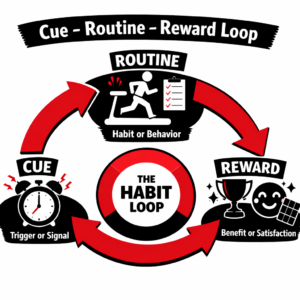
The habit formation process is deeply rooted in the brain’s reward system and motor circuitry. The cue, routine, and reward are the interconnected components that create a neurological craving, driving the behavior forward. This process allows the brain to conserve energy by turning frequently repeated actions into our reflexes, making them automatic habits. The brain does not distinguish between “good” and “bad” habits, as it seeks patterns that lead to a reward, regardless of manner or type of the outcome. This efficiency in habit formation is the reason why habits feel effortless, and hard to resist once stored in our brain.
How to apply micro habits into daily life?

Micro habits are of no use if we cannot use them into day-to-day life so, to effectively apply micro habits into daily life, consider giving a try to these steps:
- Start Small: Begin with one or two micro habits at a time, slowly and gradually add more as you become comfortable with them.
- Be Consistent: Set a specific time period each day to practice your micro habits and stick to it.
- Make It Convenient: Choose tiny habits that are simple and require minimal to no effort, making them easier to maintain.
- Track Your Progress: Use habit-tracking apps, printables, to do lists, or a journal to keep track of your progress and celebrate your little achievements over time.
- Be Patient: Micro habits may seem insignificant and difficult at first but remember that small changes over time can lead to big results.
- Set Clear Intentions: The best micro habits are those that align with a bigger goal or intention. Do not choose too many tasks to perform at first as it may make it more difficult which will end up in doing no tasks and ruining your entire schedule.
By following these steps, you can effectively incorporate micro habits into your daily routine, leading to positive changes and long-term improvements in various aspects of your life, just don’t make it too complex.
Tools to help in implementing micro habits

- Micro-Habits Card Deck: you can make it own-your-own by writing task on a paper or sticky note and reviewing it at the end of the day.
- Habit Building Apps: you can find too many over internet.
- AI-Powered Habit Tracker: ask your ai agent to make you one.
- Productivity Apps: To Do by Microsoft, Tasks by google.
- Journaling: start by writing goals, embedded in your routine and checking them at the end of the day 0r week.
I personally use apps like ‘tasks’ by Google, ‘To do’ by Microsoft, notion and Callender to track my progress and tasks, I would also like to recommend you a book “Atomic Habits”
Conclusion: The ripple effect of micro habits
Micro habits transform ambition into actions by shrinking goals until they fit into daily life. When you choose tiny, specific behaviors and attach them to existing routines, you remove friction, lower resistance, and invite consistency. The brain rewards repetition, so small wins compound into identity shifts: doing one push-up becomes being someone who moves daily; two minutes of reading becomes a reader. Design your environment, celebrate incremental progress, and track gently—these practical scaffolds make repetition inevitable. Expect setbacks and treat them as feedback: simplify cues, reduce steps, or re-anchor the habit to a different routine.
Over time, micro habits free cognitive bandwidth, enabling bolder goals without burnout. Tools —help sustain momentum, but the real power lies in patience and persistence. Start with one micro habit, and protect it with context and timing, and let the compounding effect do the rest. Small choices, repeated faithfully, reshape days, priorities, and ultimately identity. If you commit to tiny actions today, months from now you’ll be surprised by how much has changed; progress, not perfection, is the quiet engine of lasting transformation. Keep experimenting, stay compassionate with yourself, and watch small habits build extraordinary, sustainable change daily.
Fell free to leave a comment for us. Tell us what is it you liked the most out of this
Click this to read more of our blogs. thankyou 🙂